(Image Credit: leadvilleraceseries.com)
High in the Colorado Rockies, where the air thins and the trails climb toward 12,500 feet, a runner in a bright yellow Brooks shirt moved steadily along the dusty path. Spectators and fellow athletes watched as he powered forward on carbon-fiber running blades, poles in hand at times, his gait distinct but relentless. The on-screen text in the circulating video said it plainly: “Leadville 100. Double amputee. What’s your excuse?”
That runner is Brian Reynolds. On his fourth attempt at the legendary Leadville Trail 100, he became the first double amputee to finish the race. He crossed the line in just under 29 hours.
The Man Behind the Blades
Brian Reynolds lost both legs below the knee at age four after contracting meningococcemia, a rare and aggressive bacterial blood infection related to meningitis. Survival rates were low at the time. He woke from a medically induced coma as a bilateral below-knee amputee.
He grew up in the Boston area (Dedham, Massachusetts roots) and later lived in New Jersey. For years he treated his amputation partly as a convenient reason to sit certain things out. That shifted after college. A Team in Training hike across the Grand Canyon changed his trajectory. He started moving more deliberately, then seriously. Powerlifting came first. Running followed.
He became one of the fastest double-amputee distance runners in the world. His marathon personal best sits at 2:58. He holds multiple world records in his classification across distances from the 5K to the marathon and half-marathon. He has represented the United States in para-athletics events and is sponsored by Brooks Running. On the road he is exceptionally fast. On technical mountain trails, the demands multiply.
Why Leadville Matters
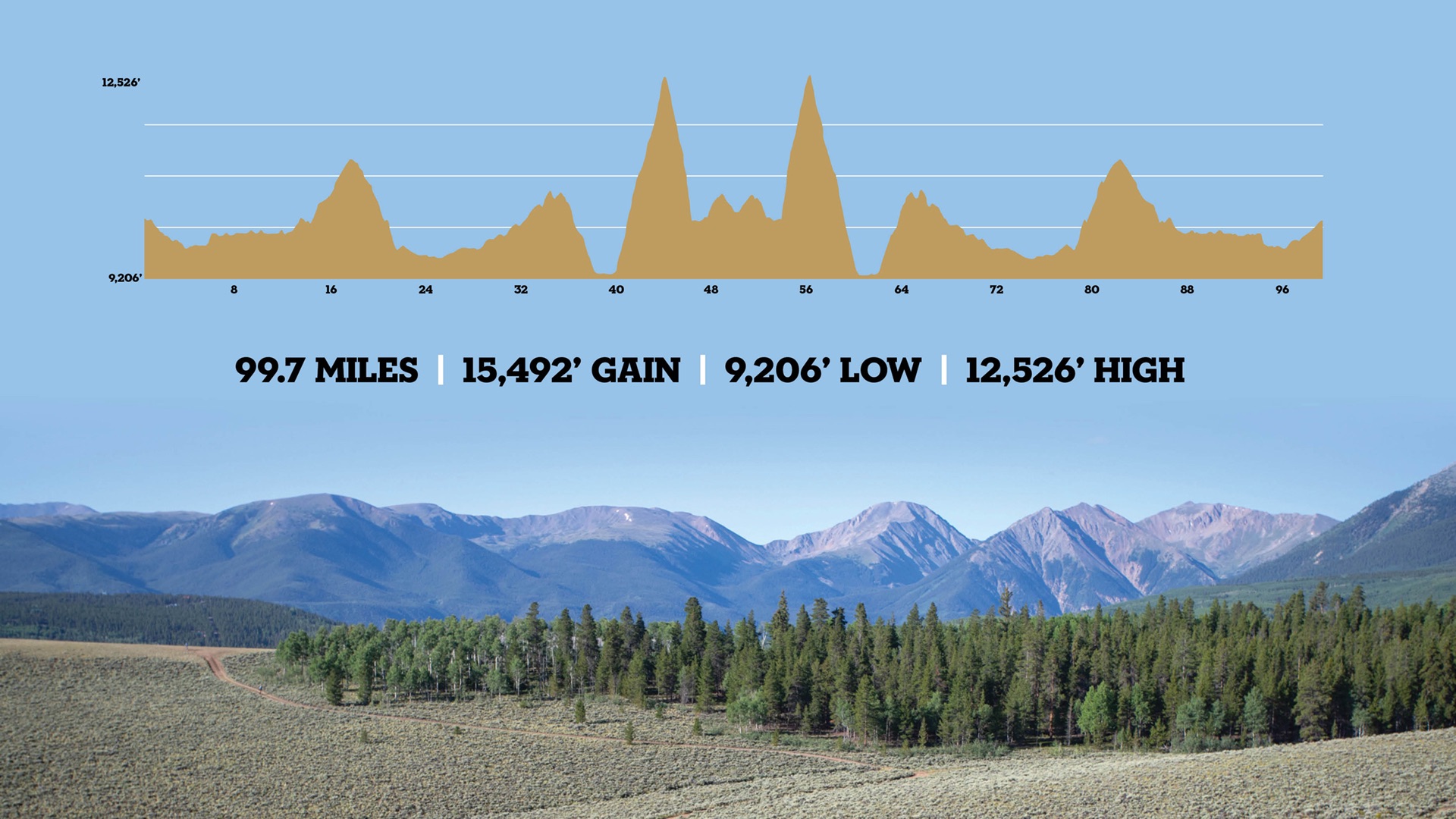
The Leadville Trail 100 is called the “Race Across the Sky” for good reason. It starts at roughly 10,200 feet in the old mining town of Leadville, climbs over Hope Pass (the high point near 12,500–12,600 feet), and covers 100 miles of rocky, rooty, high-altitude terrain with roughly 18,000 feet of elevation gain and loss under normal course conditions. The 2026 edition ran a modified route due to wildfire impacts, but the difficulty remained extreme. The cutoff is 30 hours.
For most runners the race is already a brutal test of lungs, legs, stomach, and will. For a bilateral amputee the challenges stack higher. Reynolds has no calves or ankles. Propulsion comes almost entirely from the hips and core. Fixed prosthetic feet do not flex around roots, rocks, or ruts the way biological feet do. On previous attempts his prosthetics came off repeatedly—dozens of times in a single race—each incident painful and time-consuming. Downhills require careful, often slower technique because there is no natural heel-to-toe braking. He has carried spare legs. He has relied on large, highly organized crews to manage equipment changes, nutrition, and pacing across the long hours.
He reached high mileage in earlier attempts (including mile 77 in 2025) but came up short of the finish. Each year he returned with better fitness, refined prosthetic setups (interchangeable treads, multiple pairs), and deeper experience. In 2026 the training block was his strongest yet. A crew of more than a dozen people supported the effort.
He finished.
What the Finish Represents
Finishing any 100-miler is rare. Finishing Leadville is rarer still. Doing it as the first double amputee adds a permanent mark in the race’s history. The achievement is not abstract motivation-poster material. It is concrete: nearly 29 hours of continuous problem-solving at altitude, managing skin integrity in the sockets, navigating technical sections that repeatedly tried to strip the legs off, staying ahead of cutoffs, and refusing to quit when the body and the mountain both said it would be reasonable to stop.
Reynolds has spoken in past interviews about the simple power of the first step. Big obstacles shrink when you stop staring at the entire mountain and simply begin. He has also talked about gratitude—gratitude for the ability to be out there at all, and for the people who show up to help. That community element is central to Leadville culture and to the broader Colorado outdoor scene.
A Colorado Story with Broader Reach
Leadville sits in the same high-country ecosystem that defines so much of what draws people to the Pikes Peak region and the surrounding mountains. The trails, the thin air, the demand for resilience, and the tight-knit outdoor community are familiar territory here. Stories like Reynolds’ matter because they expand the circle of who belongs on these trails and what “possible” looks like.
Adaptive athletes already push boundaries in Colorado’s mountains—on bikes, on skis, on foot. Reynolds’ finish adds another data point that limits are often more flexible than they appear, provided the right equipment, support, preparation, and stubbornness are present.
The short motivational clip circulating from the race (originally shared by Sherman Dangerfield and amplified by accounts covering Colorado) captures only a few seconds of movement. Behind those seconds sit years of training, repeated attempts, logistical complexity most runners never face, and a refusal to accept an early version of the story.
Brian Reynolds just wrote a new chapter on the Leadville course. The rest of us get to decide what we do with the question the video leaves hanging.
Created with assistance from GROK.