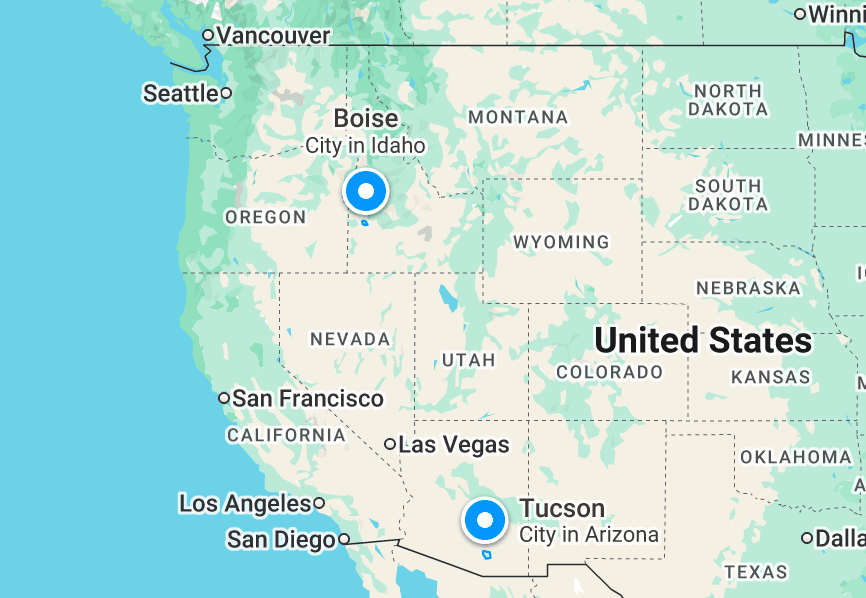
For those wondering whether or not Colorado Springs would benefit from becoming an IMBA Ride Center we have organized the following results from pier cities. While both of these cities worked earned status over ten years ago, the strategy, identity, and purpose continues to influence design and decision making even today. Colorado Springs has done well building mountain bike infrastructure over the years. We believe it’s time to earn recognition for it.
Boise–Eagle (Gold-Level IMBA Ride Center, 2015)
Boise–Eagle was named a Gold-Level IMBA Ride Center in 2015, one of only four U.S. destinations at that top tier that year, after IMBA’s trail professionals scored the foothills network for variety that runs from in-town frontcountry to a bike park and gravity terrain. The local trail partnership Ridge to Rivers now manages 190–220+ miles in the Boise Foothills; a Ridge to Rivers survey found mountain bikers were already 27% of foothills users when the gold award landed, and the system draws well over a million visits a year. An independent trails analysis reported that this roughly 200-mile system generates almost $5 million a year in tax revenue, which is why Boise and Eagle kept funding new purpose-built downhill product (including the city-funded Sideshow gravity trail that opened June 27, 2025). Southwest Idaho travel spending reached $2.43 billion in 2023 and supported 17,980 jobs; cycling is only a slice of that total, but the gold designation put Boise on the same IMBA short list as Park City, Duluth, and Oakridge and kept destination riders and industry events looking at a mid-size city instead of only resort towns. On the industry side, the award validated a shop-and-builder ecosystem (Southwest Idaho Mountain Bike Association plus Ridge to Rivers) that still adds mileage and hosts national-caliber racing in the foothills more than a decade later.
Sources: Singletracks, 2015 gold class; Idaho Press / Union-Bulletin; Western Confluence trail-tax figure; Visit Southwest Idaho / Dean Runyan 2023; Sideshow trail opening.
Tucson (Silver-Level IMBA Ride Center, 2014)
Tucson was added as a Silver-Level IMBA Ride Center in the 2014 class, with IMBA describing more than 400 miles across four mountain ranges as a year-round desert-and-sky-island destination that still carries the silver listing on Trailforks. The year before the award, ADOT’s statewide bicycling study found the Tucson & Southern region produced $13.55 million in output and 214 jobs from out-of-state bicycle tourism alone, with Tucson-area visitors spending about $352 per day versus $189 in Phoenix. That same ADOT work put Arizona mountain-bike events at $3.8 million and 60 jobs statewide, and local coverage of the study put cyclists at roughly $20 million into the southern Arizona economy — a baseline Tucson then marketed as an IMBA Ride Center rather than only a winter road-bike town. The broader cycling industry around the designation is large: El Tour de Tucson now draws 9,000+ riders and is cited at about $10 million a year, and even a single 2025 stage race (Tucson Bicycle Classic) put $180,000 into Oro Valley hotels, restaurants, and shops. Local shops, shuttle operators, TORCA, and Sonoran Desert Mountain Bicyclists used that silver status to keep building product — including a Coronado National Forest Mt. Lemmon master plan that added roughly 30 miles of sanctioned trail with new beginner and intermediate lines — which is why Tucson still shows up on destination lists as a winter Ride Center rather than a one-season road scene.
Sources: Singletracks, 2014 silver class; IMBA 2014 Tucson write-up; ADOT / Headwaters summary; ADOT press release; Arizona Daily Star on the $20M southern AZ figure; BizTucson / El Tour; KOLD on 2025 Tucson Bicycle Classic; BikeMag Tucson destination.