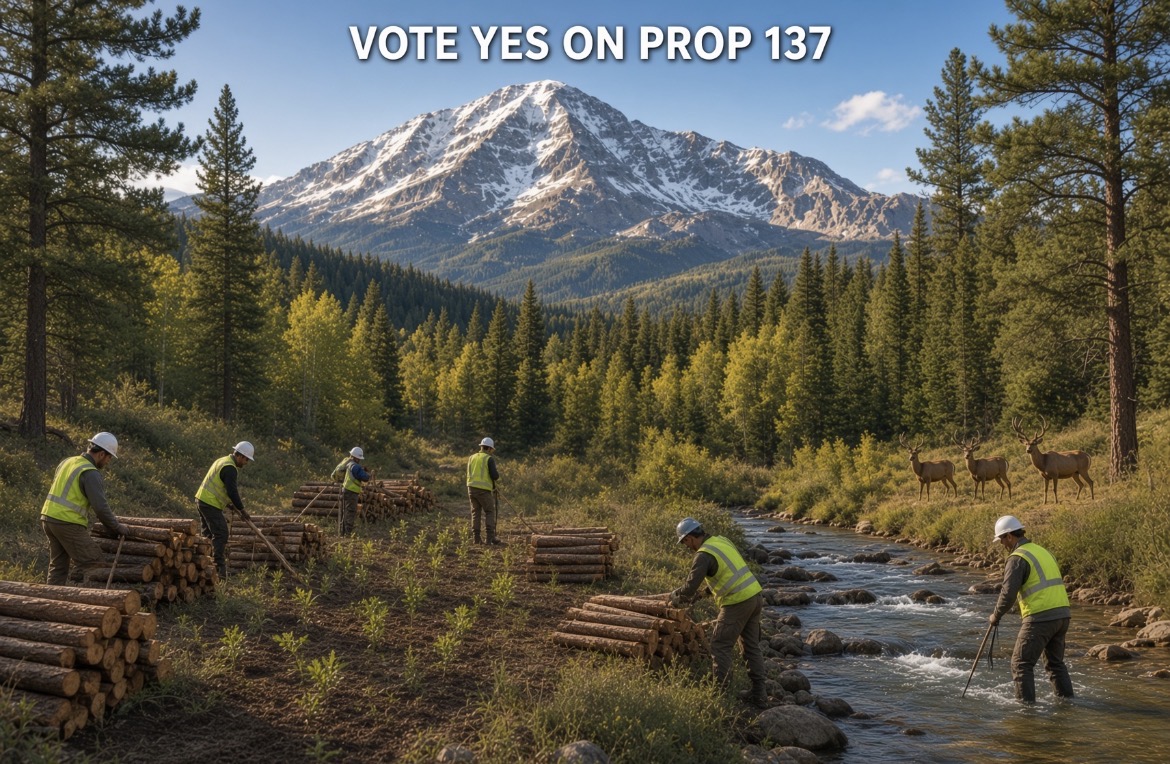
Colorado voters will decide Proposition 137 on November 3, 2026. It started as Initiative 308. The idea is simple: let the state keep the sales tax it already collects on sporting goods and outdoor equipment, and spend it on wildfire prevention, conservation, and outdoor access — no new tax, no price change at the register.
What it does
Under TABOR, Colorado must refund excess revenue to taxpayers when collections outpace inflation plus population growth. Proposition 137 creates a voter-approved exemption for an amount equal to the state sales tax on sporting goods and equipment, so that money can fund specific conservation purposes instead of going back as refunds.
You still pay the same tax. Retailers still collect it the same way. The only change is where the state sends it.
Where the money comes from
The state sales tax already paid on tents, backpacks, skis, bikes, kayaks, fishing gear, climbing equipment, and similar outdoor items. Roughly one hundred seventy-five million dollars a year, based on current sales — and that number moves with the market. Strong retail years mean more funding; slow seasons mean less. No fixed appropriation, no blank check.
How it changes over time
The stream is anchored to sporting goods purchases, not total state revenue. It grows or shrinks with the outdoor economy, with no automatic escalator and no cap. That makes it somewhat volatile, but it also means funding scales with the actual health of outdoor retail rather than a number set years ago.
Who gets the money
The revenue flows to existing programs, split into four buckets:
- Wildfire prevention and water protection — forty-seven point five percent. Roughly eighty-three million a year to the Colorado Wildfire Prevention and Water Fund, run through the Department of Natural Resources and the Colorado State Forest Service. This is the strongest use case for the measure. Colorado has roughly twenty-four million acres of forest, and the State Forest Service estimated back in twenty twenty that about ten percent need urgent attention for forest health, wildfire risk, and threats to water supplies. The money funds prescribed burns, forest thinning, wildfire risk mitigation grants, community wildfire response planning, and watershed restoration — work that protects homes, drinking water, and the forests we recreate in. Prevention is dramatically cheaper than suppression and cleanup, and this funding arrives just as federal support for this work is pulling back.
- Great Outdoors Colorado, or GOCO — forty-seven point five percent. The same eighty-three million a year, on top of GOCO’s existing lottery funding. GOCO already invests in parks, trails, wildlife habitat, and local outdoor projects across the state. This would roughly double its cash flow, funding new public lands and state parks, trail maintenance, ecosystem restoration, and the infrastructure our outdoor economy depends on. It’s a proven program getting a second dedicated revenue stream.
- Outdoor Equity Fund — two point five percent. About four point three million a year to Colorado Parks and Wildlife’s Outdoor Equity Grant Program, which helps youth and families access the outdoors.
- Outdoor Recreation Economic Development Cash Fund — two point five percent. About four point three million a year to the state’s Outdoor Recreation Industry Office for workforce training and economic development in the outdoor sector.
Exact percentages are locked in the measure itself — the legislature sets the sub-allocations within each fund through statute. The intent is clear, but the fine print of how each bucket spends its share is worth watching after passage.
What it doesn’t do
No new tax. No rate change. No property or income tax impact. No redirection of lottery money away from GOCO. No new bureaucracy. Retailers’ collection process stays identical.
Why it matters
Colorado’s outdoor infrastructure is under pressure — crowded trails, climbing wildfire risk, stretched state parks, and a forest health backlog measured in the millions of acres. This taps an existing revenue stream and points it at problems the outdoor community feels directly. It’s not a silver bullet — one hundred seventy-five million is a fraction of statewide need — but it’s a meaningful, dedicated source that doesn’t ask taxpayers for more.
The bottom line
Proposition 137 is a TABOR exemption, not a tax increase. It redirects existing sporting goods sales tax to wildfire prevention, conservation, and outdoor access. The money comes from gear you already buy, scales with the outdoor economy, and flows to programs protecting the places we recreate.
Vote yes on Proposition 137 this November. It’s one of the rare ballot measures that asks nothing new of you — just a smarter use of money the state already collects. For the trails, forests, and parks our community depends on, that’s a yes worth casting.