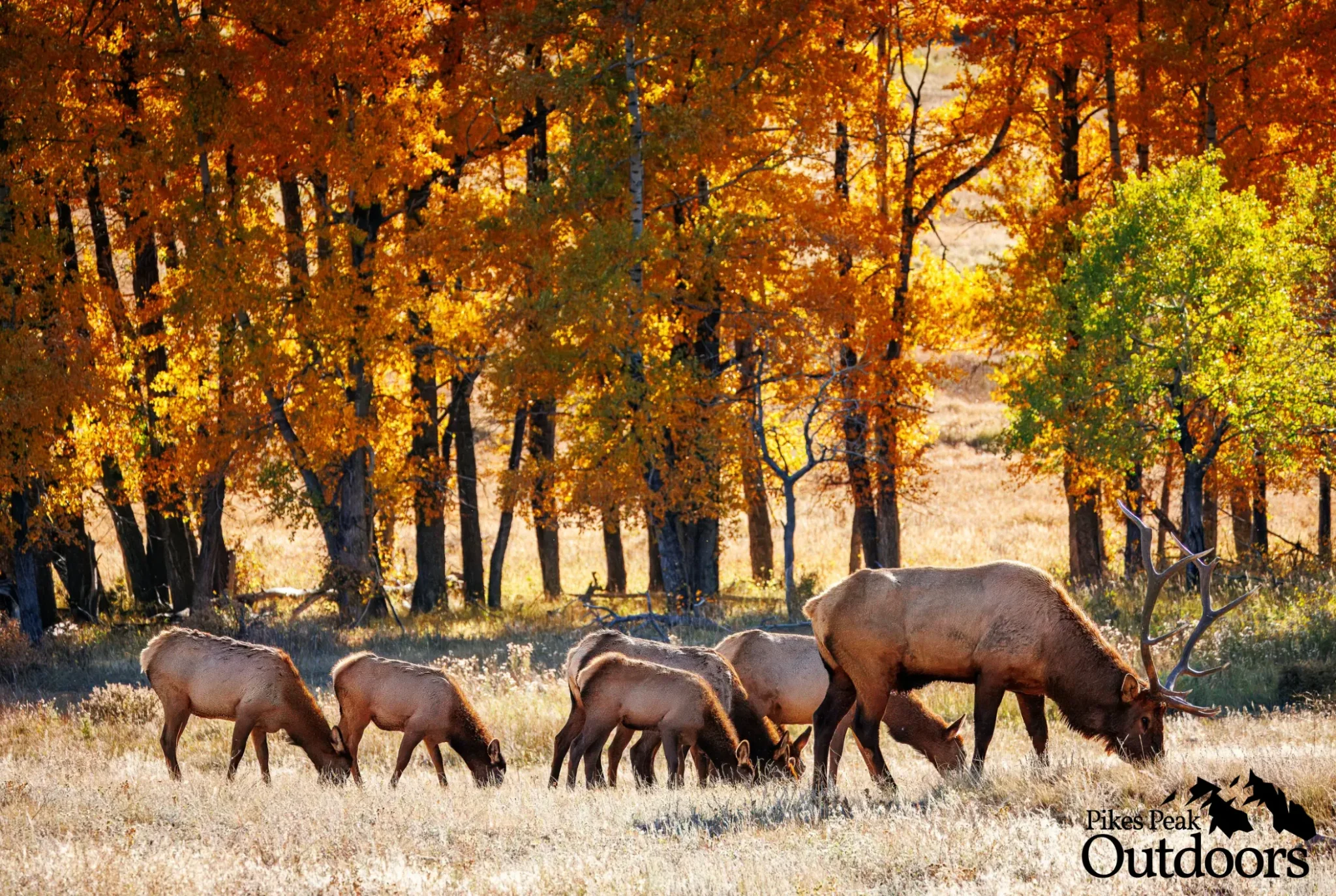
Colorado Parks and Wildlife Raises Tags to Manage Growing Herds
Colorado’s deer and elk herds are thriving, and Colorado Parks and Wildlife is responding the way it always has: by putting more hunters in the field.
This year, CPW is adding roughly fifty-six hundred deer licenses statewide, a six percent increase, and sixty-six hundred limited elk licenses, up five percent. The biggest jumps are antlerless elk tags in the northwest, where quotas for the Bears Ears and White River herds rose seventy-six and sixty percent respectively. Those herds sit at or above their population objectives after three mild winters, and CPW wants more cows harvested to bring them back in line.
Pronghorn doe tags are up in several units too, along with new late-season cow hunts in places like Game Management Unit forty. The logic is straightforward — when a herd exceeds its objective, the agency adds opportunity rather than waiting for winter to do the thinning.
For hunters, that means more chances to draw a tag, more over-the-counter options in some units, and a real shot at helping manage the resource. Archery season opened September second and runs through the thirtieth, so the timing lines up.
It’s a good reminder that hunting in Colorado isn’t just recreation. It’s the primary tool CPW uses to keep wildlife populations healthy, and this year’s tag increases are a direct response to herds that are doing exactly what good management looks like.
Closer to Home: More Cow Opportunity Around Pikes Peak
The same logic is showing up in the Front Range foothills. The Eleven Mile elk herd — Data Analysis Unit E-23, covering Game Management Units 59, 511, 512, 581, and 591 across El Paso, Teller, and Fremont counties — was estimated at about 3,530 animals after the 2023 hunt. That sits above its 2,700–3,300 objective. Those are the units that take in Pikes Peak, Woodland Park, Divide, Cripple Creek, and the country dropping toward Cañon City.
For 2026, Colorado Parks and Wildlife made three changes that matter to local hunters:
- Units 59, 511, 581, and 591 were added to the over-the-counter antlerless archery list. Residents can buy a cow-elk archery license over the counter for those units instead of drawing one.
- Antlerless elk licenses in those same units moved from List A to List B. That means a hunter can hold two of them in the same year.
- A new limited nonresident archery cow hunt (E-F-059-V1-A) was created for the same four units, so CPW can cap out-of-state pressure while still offering the harvest it wants.
On the deer side, the Rampart herd (D-50: units 59, 511, 512, and 591) is a smaller mountain mule-deer population, recently estimated near 3,900. The neighboring Cripple Creek herd (D-16: units 49, 57, 58, and 581) is larger, around 10,900 after the 2024 hunt. Statewide deer increases were concentrated in the northwest; southeast quotas were more mixed. What local hunters did get is a late either-sex deer season, December 1–31, that includes units 49, 57, 58, 59, 511, 581, and 591.
None of this is a free-for-all. Much of units 581 and 591 is private or military land, and public-land elk still drop off Pikes Peak toward private ground as rifle season starts. The point is the same one CPW is making statewide: when a local herd is at or above objective, the agency adds tags and easier license combinations instead of waiting on winter. Archery is already open through September 30. For current hunt codes and leftover lists, use the official 2026 Big Game Brochure at cpw.state.co.us.